Cloud migration is no longer just about lifting and shifting. For industries like healthcare, financial services, and manufacturing, it's a high-stakes transformation governed by strict regulations, legacy systems, and mission-critical operations. A recent IDC study, sponsored by Microsoft, reveals a pivotal shift: agentic AI is becoming the critical unlock for continuous, intelligent, and compliant modernization. This trend moves organizations beyond periodic, manual efforts to an adaptive, automated approach that can keep pace with regulatory and competitive pressures. You can explore the full analysis in the source material.
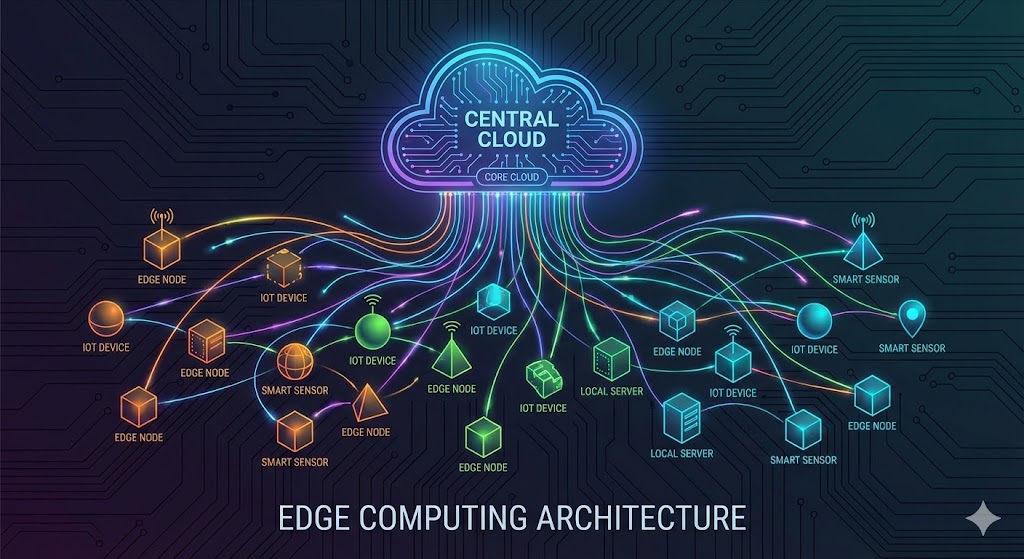
Industry-Specific Challenges and Cloud-Powered Solutions
The IDC study highlights that while migration frameworks are horizontal, their impact is deeply vertical. Each regulated sector faces unique hurdles that agentic AI and modern cloud platforms are uniquely suited to address.
| Industry | Key Modernization Challenges | Cloud & Agentic AI Opportunities |
|---|---|---|
| Healthcare | HIPAA/HITRUST compliance, fragmented EHR/PACS data, aging infrastructure, ransomware risk, low-latency clinical needs. | Secure data integration, elastic compute for genomics/imaging, AI-powered diagnostics, robust disaster recovery. |
| Financial Services | PCI DSS, SOX, DORA, EU AI Act compliance, legacy mainframes/COBOL, real-time fraud detection needs. | PaaS for continuous compliance, real-time risk analytics, automated evidence collection, microservices for agility. |
| Manufacturing | Legacy OT protocols, air-gapped SCADA/MES, global supply chain complexity, IP protection, edge connectivity. | IoT for predictive maintenance, digital twins, computer vision for quality control, unified IT/OT data models. |
Real-World Impact: Franciscan Health migrated its Epic EHR to Azure, achieving $45M in savings over 5 years and cutting disaster recovery failover from hours to ~30 minutes. Mexican fintech Crediclub boosted uptime from 80% to 99.5% by adopting a serverless PaaS and microservices architecture.
The Microsoft Blueprint: Continuous, Intelligent, Collaborative Modernization
The strategy outlined is built on a principle of continuous modernization, powered by agentic automation tools like Azure Copilot and GitHub Copilot. These systems automate assessments, orchestrate migrations, and optimize operations. The framework involves a multi-path approach (rehost, replatform, refactor, SaaS) supported by:
- Azure Migrate: For unified discovery, assessment, and execution.
- Azure Accelerate: Providing funding, expert partners, and guided deployments via Cloud Accelerate Factory.
The Critical Perspective: Limits and Considerations While the potential is vast, success hinges on several factors:
- Skill Gaps: Agentic AI tools require teams that can guide, validate, and integrate their outputs. The "skills gap" shifts but doesn't disappear.
- Vendor Lock-In: Deep integration with a specific cloud provider's AI and PaaS ecosystem can increase switching costs.
- Regulatory Interpretation: Tools can automate compliance evidence collection, but the initial interpretation of complex regulations like DORA or the EU AI Act remains a human, legal challenge.
- OT Integration Complexity: In manufacturing, bridging IT cloud tools with proprietary, safety-critical OT systems is often a multi-year, customized endeavor, not an out-of-the-box solution.
For a deeper understanding of implementing secure, policy-driven systems in the cloud, consider reading this case study on building fine-grained API authorization with Amazon Verified Permissions.

Your Next Steps in the Modernization Journey
Agentic AI is setting a new standard, transforming cloud migration from a costly, disruptive project into a continuous capability. For technical leaders, the imperative is clear: evaluate modernization not just as infrastructure change, but as a strategic initiative to build resilient, AI-ready, and compliant enterprises.
Where to go from here:
- Assess Your Agentic Readiness: Audit your legacy estate and identify processes ripe for intelligent automation, starting with dependency mapping and code assessment.
- Pilot in a Contained Domain: Choose a non-critical but complex workload to test an agentic-assisted refactor or replatform, measuring time-to-value and skill development.
- Plan for Hybrid Governance: Design your cloud governance model to incorporate AI agent oversight, audit trails, and human-in-the-loop checkpoints from the start.
The convergence of AI and cloud is also democratizing access to public data. To see another facet of this trend, check out how Data Commons MCP on Google Cloud enables querying public datasets with AI. The future belongs to organizations that leverage these intelligent tools to modernize securely, efficiently, and at scale.