The New Constraint Isn't Code—It's Decision-Making
For years, the narrative in software engineering has been that writing code is the bottleneck. We optimize our IDEs, adopt faster languages, and invest in CI/CD pipelines—all in the name of shipping more code, faster. But what happens when AI tools make coding nearly effortless?
Spotify is living that reality. According to Niklas Gustavsson, Spotify’s Chief Architect and VP of Engineering, the company has reached a point where 99% of engineers use AI coding tools weekly, and 94% report increased productivity. Pull request frequency has jumped 76%, with most PRs now authored by a developer working alongside an AI agent.
"We roll out tools internally all the time to make our developers more productive, but we have never seen the rate of adoption that we’ve seen rolling out AI coding tools."
This shift doesn't mean the engineering team is done—it means the bottleneck has moved. The real challenge now is human decision-making: what to build, how to prioritize, and how to review the flood of AI-generated code.
Spotify’s approach, shared at Code with Claude 2026, offers a blueprint for any organization scaling developer experience in the age of AI. You can watch the full talk here.
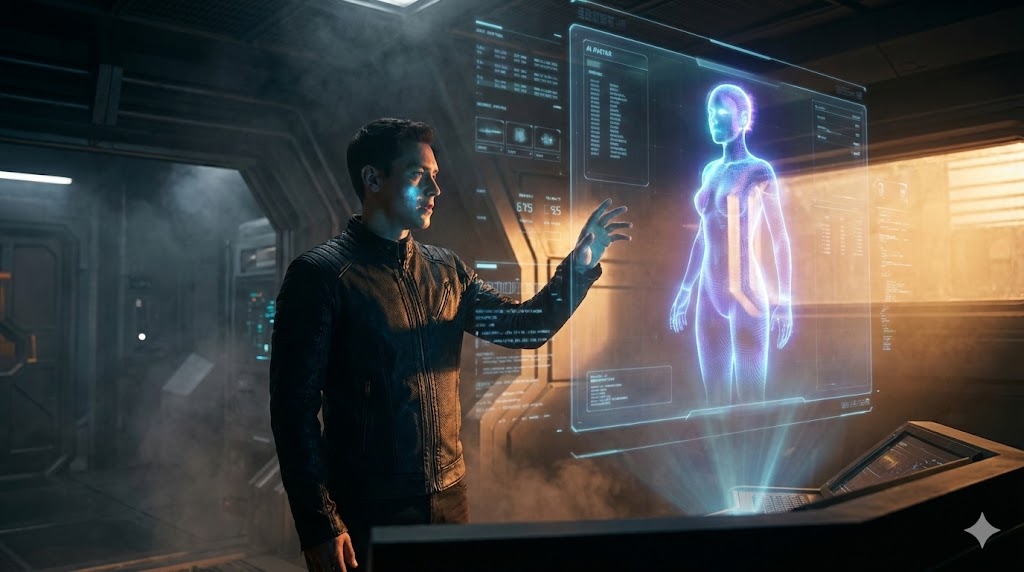
From Manual Migrations to Fleet Management: The Foundation
Before AI agents were a thing, Spotify faced a different problem. Their production codebase was growing 7x faster than the number of engineers. Developers were drowning in maintenance—upgrading dependencies, migrating APIs, patching vulnerabilities. Migrations were the #1 source of frustration.
Instead of asking hundreds of teams to manually update components, they built Fleet Management. The underlying engine, Fleetshift, automates changes across thousands of components. To date, Spotify has merged over 2.5 million automated maintenance PRs, most auto-merged with no human in the loop.
"Instead of doing this component per component and fairly manually, can we imagine a way where we do this as a way to mutate our entire fleet of components?"
But deterministic scripts hit a wall with complex changes—replacing API calls or refactoring usage patterns. That's where LLMs came in.
Meet Honk: Spotify's Background Coding Agent
Honk is Spotify's internal AI agent, built on Claude using the Agent SDK. It runs in Kubernetes pods, has access to CI build systems across multiple OSes, and integrates directly with Fleetshift for orchestration.
# Conceptual example: How Honk might be triggered via Slack
# This is a simplified representation of the orchestration logic

def handle_slack_command(command):
    """
    Handle a Slack message that mentions Honk.
    Extract the task, create a session, and return a PR.
    """
    if "@honk" in command:
        task = extract_task(command)
        session_id = create_agent_session(task)
        pr_url = run_honk_in_k8s(session_id)
        return f"Honk is working on it! PR will be at {pr_url}"
    return None
In a recent Java migration across backend services, Honk completed the entire migration in three days—work that previously took hundreds of teams weeks or months.
Now Honk is available over Slack. Engineers can mention it mid-conversation, and it will fly off, work on the problem, and return with a PR. Honk v2 introduces multiplayer collaboration: shared agent sessions and team projects through Chirp.

Developer Experience Is for Agents, Too
One of Spotify's oldest engineering principles is: "The fewer technologies we are world-leading in, the faster we go." This predates AI by years. By standardizing on a focused set of technologies, they build deeper expertise and make it easier for engineers to collaborate.
That principle turned out to be equally important for agents. When Claude has consistent code to reference, it performs significantly better. In fragmented codebases, agent performance is measurably worse.
"If Claude has a lot of other code to look at, and that code looks roughly consistent, Claude will do a better job."
Backstage: The Single Pane of Glass
Backstage, Spotify's open source internal developer portal (IDP), is the starting point for this consistency. Before Backstage, Spotify had ~100 different internal tools. Now, everything is consolidated into a catalog of software components.
Backstage's capabilities are exposed as MCPs and command-line tools, so Claude can look up who owns a component, read its documentation, or ping the responsible team on Slack.
Soundcheck and Golden State: Active Guardrails
Golden state defines recommended technologies and practices for each component type. Soundcheck provides a UI for teams to self-assess against those standards. Combined with static analysis and linting, these become active guardrails. When Claude uses a non-optimal pattern, it gets immediate feedback from the lint system and corrects itself.
"When Claude works in our codebase, it will get immediate feedback on if it’s using the right set of technologies and right set of design patterns."
This feedback loop works for both developers and agents—and it's been one of the most effective ways to drive consistency at scale.
The Future: More Ideas, Faster Decisions
With coding velocity skyrocketing, the constraint shifts to human decisions. Spotify has always had more ideas than capacity—but now anyone can open Claude in the client monorepo and prototype a feature in minutes. Even the CEO builds prototypes this way.
"This has brought prototyping from something that could take days or weeks to literally taking minutes now."
The flip side: 76% more PRs to review. Spotify is learning where to apply human judgment—auto-merging what's safe, focusing review where it matters most—and rethinking planning as the bottleneck moves from coding to decision-making.
Limitations & Cautions
- AI-generated code still needs review. Auto-merging works for simple maintenance, but complex logic changes require human oversight.
- Standardization is a double-edged sword. Too much can stifle innovation; Spotify's "golden state" must evolve continuously.
- Agent collaboration is nascent. Multiplayer agent sessions (Honk v2) are promising, but real-world reliability at scale is unproven.
Next Steps for Your Organization
- Invest in a developer portal (Backstage or similar) to create a single source of truth for your software catalog.
- Standardize your tech stack—even if it hurts at first. Consistency pays dividends for both humans and AI.
- Start small with automation. Fleet Management didn't happen overnight. Pick one painful migration and automate it.
- Treat agents as first-class developers. Give them the same tools, documentation, and feedback loops as your human engineers.
Fleetshift and Honk are available as part of Spotify Portal for Backstage. If orchestrating complex code changes at scale is relevant for your organization, reach out to Spotify's platform team for a personalized walkthrough.
Recommended Reading: